
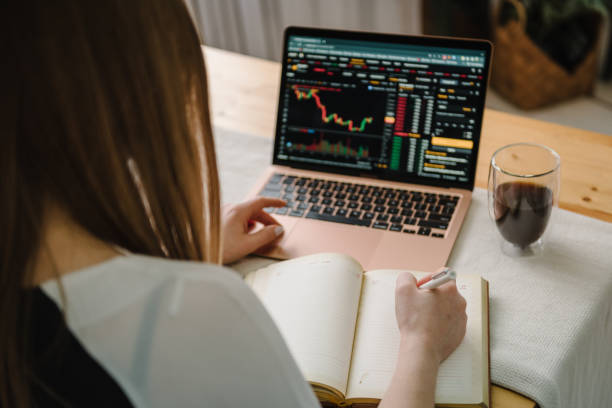
Not long ago, trading was associated with loud exchange floors, frantic hand signals, and traders shouting orders across crowded rooms. Today, those scenes have largely disappeared, replaced by screens, algorithms, and digital dashboards. At the center of this transformation is the online trading platform, which has redefined how individuals and institutions access financial markets, analyze data, and execute trades with speed and precision.
Technology has not only reshaped where trading happens, but also how decisions are made, how risks are managed, and who can participate. From automation to artificial intelligence, digital innovation has fundamentally altered the trading experience, making it more efficient, data-driven, and accessible than ever before.
The Shift From Physical Trading Floors to Digital Environments
The decline of open-outcry trading marked a turning point in financial history. As electronic systems matured, exchanges around the world began transitioning away from physical floors in favor of fully digital operations.
This shift delivered several immediate advantages:
- Faster trade execution
- Lower transaction costs
- Improved transparency
- Broader market access
Electronic trading removed geographical limitations, allowing traders to operate across markets and time zones without being physically present. This evolution laid the foundation for today’s highly connected global trading ecosystem.
Automation and the Rise of Machine-Driven Trading
Automation has become one of the most influential forces in modern trading. Tasks that once required human intervention are now handled by software capable of processing vast amounts of data in milliseconds.
How Automation Enhances Efficiency
Automated trading systems are designed to follow predefined rules and execute trades without emotional interference. This improves consistency and reduces human error.
Key benefits include:
- Faster order execution
- Reduced operational costs
- Improved accuracy in repetitive tasks
- Better compliance and reporting
By handling routine processes, automation allows human traders to focus on strategy development and complex decision-making.
Algorithmic Trading in Modern Markets
Algorithmic trading uses mathematical models and predefined conditions to identify opportunities and place trades. These algorithms analyze price movements, volume, and timing to optimize execution.
In highly liquid markets, speed is critical. Even microseconds can determine whether a trade is profitable. Algorithms excel in such environments, giving traders a competitive edge.
Artificial Intelligence and Data-Driven Decision Making
Artificial intelligence has taken trading technology to a new level. Unlike traditional automation, AI systems can learn, adapt, and improve over time.
AI in Market Analysis
AI-powered tools analyze massive datasets, including historical prices, economic indicators, and alternative data sources. These systems identify patterns that may not be visible through manual analysis.
Applications include:
- Predictive price modeling
- Risk assessment and scenario analysis
- Market sentiment evaluation
- Trade optimization
AI-driven insights help traders make more informed decisions in increasingly complex markets.
Natural Language Processing and Market Intelligence
Natural language processing allows machines to interpret news articles, earnings reports, and policy announcements in real time. This enables traders to react quickly to market-moving information.
By filtering relevant data from vast information streams, AI reduces information overload and enhances situational awareness.
Digitization and the Evolution of Trading Workflows
Digitization has streamlined the entire trading lifecycle, from order placement to post-trade reporting. Manual processes have been replaced with integrated systems that improve efficiency and compliance.
Improved Transparency and Record-Keeping
Digital systems automatically capture and store trade data, making it easier to meet regulatory requirements and conduct audits.
Advantages include:
- Accurate transaction records
- Faster reconciliation
- Enhanced reporting capabilities
This level of organization supports both regulatory compliance and internal performance analysis.
Advanced Visualization Tools
Modern trading platforms incorporate data visualization tools that help traders interpret complex information quickly. Interactive charts, dashboards, and simulations make it easier to identify trends and assess risk.
In the middle of this technological evolution, the online trading platform has become more than just an execution tool. It now serves as a comprehensive decision-support system, combining analytics, automation, and user-friendly interfaces to enhance overall trading performance.
Remote Trading and Global Accessibility
Technology has removed the need for traders to be physically present on exchange floors. Secure cloud-based systems and remote access tools enable trading from virtually anywhere.
Impact on Work Models
Remote trading has transformed how trading desks operate. Teams can collaborate across locations while maintaining full market access.
This flexibility became especially important during global disruptions, proving that digital trading infrastructure can support continuity even in challenging circumstances.
Democratization of Trading
One of the most significant outcomes of technological progress is increased market accessibility. Today, individuals with a smartphone and an internet connection can participate in global markets.
This democratization has expanded financial inclusion by:
- Lowering entry barriers
- Providing access to educational tools
- Enabling participation across asset classes
Retail traders now have access to tools that were once reserved for institutional players.
Blockchain Technology and New Asset Classes
Blockchain has introduced new possibilities in trading, particularly through digital assets and decentralized systems.
How Blockchain Is Changing Trading
Blockchain technology enables peer-to-peer transactions without traditional intermediaries. This reduces costs and increases transparency.
Key features include:
- Secure, immutable transaction records
- Faster settlement times
- Reduced counterparty risk
Digital assets such as cryptocurrencies highlight how technology can create entirely new trading ecosystems.
The Changing Role of Human Traders
As technology advances, the role of human traders is evolving rather than disappearing entirely. While automation handles standardized tasks, human expertise remains essential in areas requiring judgment, creativity, and complex negotiation.
Skills That Remain Valuable
Human traders continue to add value through:
- Strategic thinking
- Relationship management
- Handling non-standard transactions
- Interpreting nuanced market conditions
Technology augments human capability rather than fully replacing it, especially in specialized and adaptive roles.
Challenges and Considerations in a Tech-Driven Trading World
Despite its advantages, technology-driven trading also introduces challenges.
Key concerns include:
- Overreliance on automated systems
- Cybersecurity risks
- Algorithmic errors during extreme volatility
- Ethical and regulatory considerations
Balancing innovation with risk management remains a priority for market participants.
Conclusion
Technology has fundamentally reshaped the online trading experience, transforming execution, analysis, and accessibility. From automation and AI to digitization and remote access, modern trading is faster, more efficient, and increasingly data-driven. These advancements have opened markets to a wider audience while redefining professional trading practices.
For traders seeking a reliable online trading platform in India, Flow FX aligns with this digital evolution by offering structured tools, transparent systems, and technology-focused solutions that support informed decision-making. Its approach reflects how modern trading platforms can enhance efficiency and accessibility without compromising on control or clarity.